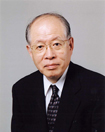
Ryoji NOYORI:
President, RIKEN
In many fields of science, simulations are an important research method alongside experiment and theory. Simulations will be essential for the future of science and technology. In industry they are highly useful in the development and design of products. For Japan to maintain and improve its international competitiveness in science and technology, it is essential that we carry out top-quality R&D in supercomputing hardware and software.
This is why the government’s third Science and Technology Basic Plan called for the development and utilization of the Next-Generation Supercomputer, as a technological foundation of national importance that requires major investment. A law supporting this recommendation has now come into force. RIKEN is responsible for the development and operation of the supercomputer under this law.
One of RIKEN’s important missions is to design and create the R&D facilities that are essential for the advancement of Japanese science and technology, and to take the lead in putting these facilities to use. We are putting our full efforts into the development of the Next-Generation Supercomputer, which we believe will be recognized as the world’s best. We will create a top-quality environment for the supercomputer, and build a center of excellence for research and the training of future generations of scientists and engineers.
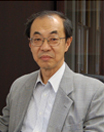
Tadashi WATANABE:
Project Leader,
RIKEN Next-Generation Supercomputer R&D Center
The Next-Generation Supercomputer will be a driving force behind Japanese science and technology and an essential foundation for advanced research and development. It will be used in the natural sciences (physics, chemistry, and biology), nanoscience, the life sciences, engineering, and the prediction of environmental change and natural disasters. To build the supercomputer, we have to develo many pieces of cutting-edge computer technology, from semiconductors to system software, and to continue developing supercomputers in the future, we will have to keep up this level of R&D in Japan. We also plan to make these technologies available to other research institutes, where we hope they will contribute to Japanese information technology in general. For all these purposes, we are gathering Japanese expertise and putting ou full efforts into building the fastest supercomputer in the world.